COMPACTING BALERS FOR SCRAP METAL
The Balers are designed to reduce and concentrate metals from industrial plants or demolition waste and disposal sites.
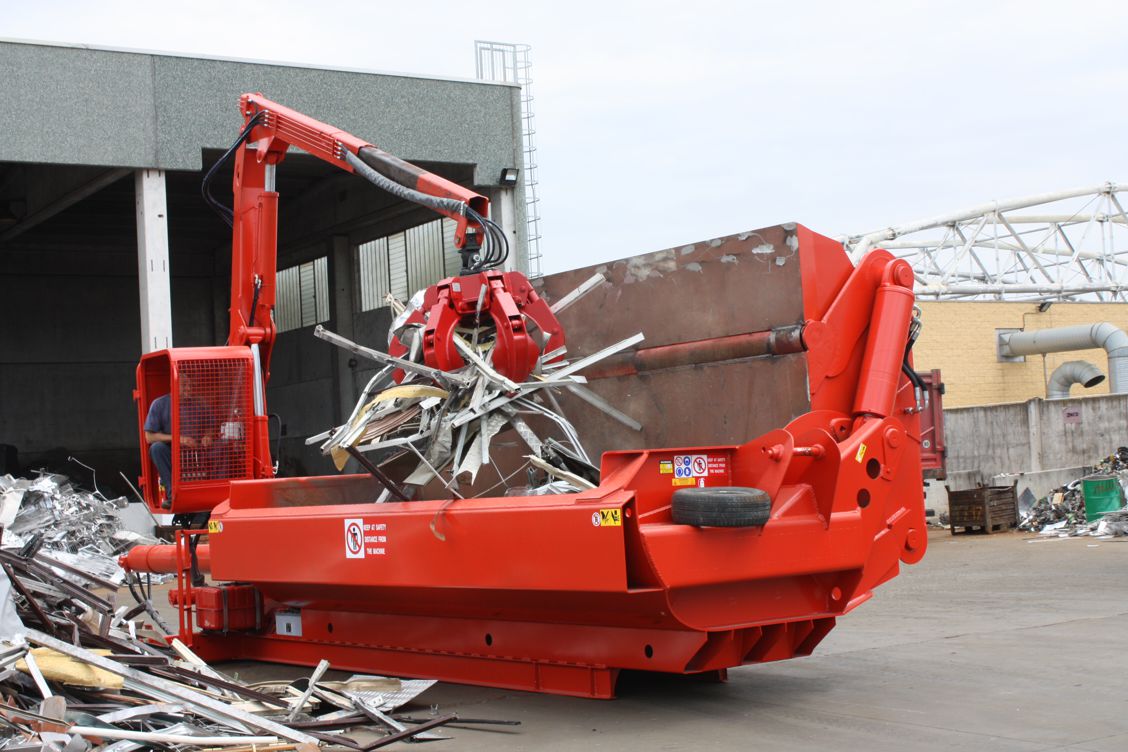
Each scrap compactor baler consists of a mobile unit equipped with an unloading and lifting system, as well as a cabin and a grab.
The Balers are built with a solid monolithic structure made of special Weldox and Hardox steel, and can be operated by diesel or electric motors.
The Ariete Ecological Baler combines the capacity for powerful and strong compaction with extremely easy movement.
Thanks to the use of special high-performance steels, a solid structure with a low weight is created, allowing for easy transport via trucks equipped with a Roll-on/off device.
The Ariete Ecological Baler can be equipped with its own loader for loading and unloading operations and can also have remote control and automatic cycle devices. The Ariete Ecological Baler is specifically designed to compact:
- Cars
- Metal
- Scrap metal
Bonfiglioli Balers are the ideal solution for processing metal waste. The company offers a wide range of high-quality solutions to meet all customers’ needs.
Bonfiglioli Balers have high production output and are designed to offer low operating costs.
Ing. Bonfiglioli is known in the global market as a leading company in the production of mobile equipment for the recycling and processing of scrap metal.
Characteristics of the metal compactors:
- Built with a solid monolithic structure made of special Weldox and Hardox steel, to achieve maximum durability and reduced weight;
- Consist of a mobile unit equipped with an unloading and lifting system, as well as a cabin and a grab;
- Available in mobile or stationary versions, with diesel or electric motor;
- Suitable for compacting loose metals, white goods, cars, and industrial scrap;
- Made of wear-resistant steel in the sections in direct contact with the scrap;
- Various options available: autonomous crane, remote control, and automatic cycle.
Advantages of our compactor balers:
- Easy to transport with trucks equipped with a roll on-off device, thanks to the use of special high-performance steels;
- Excellent price-performance ratio, with high production output versus low operating costs.
Discover our range and optimise your scrap processing process with the best solutions available!
Scrap metal balers
Compactor balers are industrial machines designed for the specific purpose of compressing scrap metal. These systems are fundamental in the materials recovery sector, as they transform bulky and difficult-to-manage waste into compact, high-density bales. The highest performing and most efficient types are hydraulic scrap metal balers. Their primary function is to apply high hydraulic force to drastically reduce the volume of materials. This process is vital for managing different types of waste: balers for ferrous and non-ferrous scrap are, in fact, engineered to effectively process both steel and cast iron (ferrous) and aluminium, copper, brass, and alloys (non-ferrous). Scrap metal balers, particularly industrial scrap compactor balers, optimise the entire logistics and recovery chain. As balers for metal recovery and recycling, they represent the first indispensable link in the circular economy chain. The operation of compacting scrap metal, ferrous and non-ferrous scrap offers tangible advantages:
- Logistical optimisation: high-density bales maximise the load capacity of transport vehicles, drastically reducing handling costs;
- Material enhancement: compacted material is easier to store and more suitable for subsequent melting in steelworks or foundries;
- Operational efficiency: modern models, such as scrap balers with automatic feeding, allow for continuous, high-productivity work cycles, reducing operator intervention and increasing safety.
In summary, scrap balers are indispensable technological solutions for transforming a management cost (waste) into a recoverable resource.
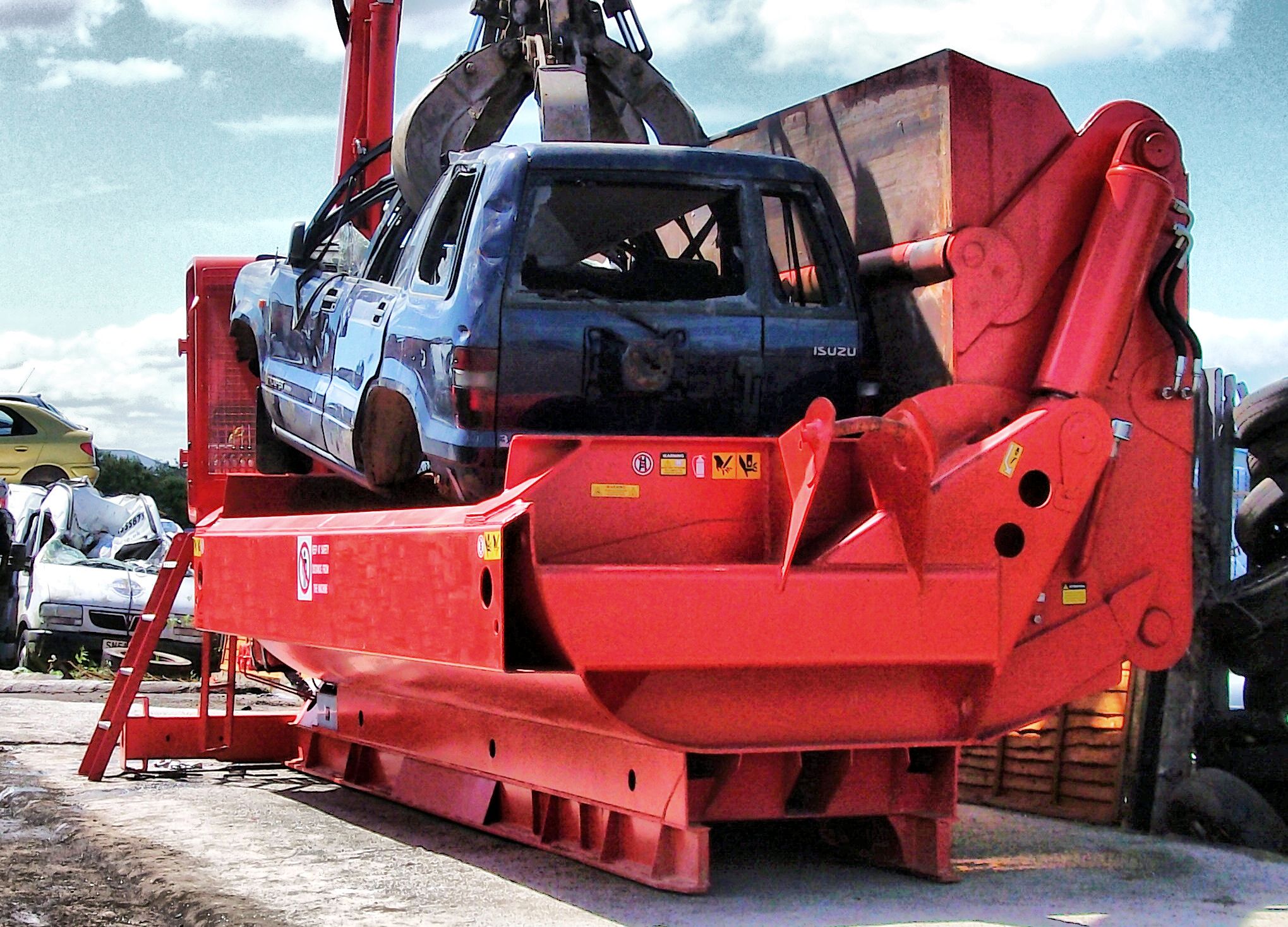
The management of End-of-Life Vehicles (ELVs) and bulky waste is a central operation for car dismantling plants. Specific compactor balers are used to optimise logistics and enhance the material’s value. These systems are specifically engineered for the compaction of car bodies and differ from generic scrap metal balers in terms of box size and compaction force. The specific machinery for this sector is identified by various technical terms which, although with different nuances, define the same category of plant. We commonly speak of balers for car dismantlers or, more specifically, balers for end-of-life vehicles (ELVs). These are solutions engineered for the volume reduction of whole cars (previously de-polluted) and, depending on the model, of heavier comparable scrap. Terms like car crushers for dismantlers often refer to particular configurations of these machines, such as mobile or hook-lift (roll-on/off) set-ups, which are particularly valued for their operational flexibility directly in storage yards. The objective of these machines – also defined as balers for the compression of disused cars and vans or balers for processing car body scrap – is to implement an efficient compaction system. The process of compacting scrap metal derived from ELVs transforms bulky waste into a dense bale, easy to transport and ready for delivery to the steelworks. The use of adequate balers for car bodies and scrap is a fundamental requirement for the economic and environmental sustainability of the plant. These metal balers must guarantee reliability and high performance. The choice of the correct balers for car bodies and scrap also depends on the treatment volumes. Investing in high-performance balers for end-of-life vehicles optimises the entire recovery chain, as balers for car bodies and scrap represent the heart of the ELV treatment plant.
Yes, it is their primary function. Scrap compactors for production waste disposal are designed to transform trimmings and processing residues into resources. Rather than “disposal,” we speak of “recovery.” Through efficient metal compaction systems, waste is reduced into high-density bales. This optimises logistics and maximises the recovery of ferrous material and non-ferrous material. They are strategic solutions both for manufacturing industries and as compactors for scrap for industrial waste management companies.
A metal compactor operates via a high-pressure hydraulic system. These systems, also known in the industry as scrap balers, are fundamental for the efficient management of waste and its recovery. The operation follows a precise operating cycle:
- Loading: the loose scrap is inserted (manually or automatically) into the compaction box, effectively starting the scrap metal recycling process;
- Compaction: using hydraulic cylinders (often arranged on two or three axes), the balers for processing ferrous and non-ferrous materials exert a high force, transforming the uneven volume of the scrap into a compact, high-density bale;
- Ejection: the finished bale is ejected from the scrap metal balers, ready for logistics, storage, and transport to foundries or steelworks.
Modern metal compactors are engineered for different materials: ferrous balers are ideal for steel and sheet metal, while balers for non-ferrous scrap are optimised for aluminium, copper, and alloys. To operate safely and efficiently, the plants must be scrap compactors with European CE certification. Since every piece of scrap has unique characteristics, the highest-performing solutions are often custom-built compactors for scrap, engineered to adapt to the specific material and production volumes of the customer.
Choosing the best scrap compactor baler depends on a precise technical analysis of the specific application. Rather than one “best” machine overall, the optimal engineering solution exists for specific scraps and production volumes. The fundamental criteria to evaluate include:
- Type of material: this is the crucial factor. Does the machine need to process generic ferrous and non-ferrous scrap? Or specific waste that requires dedicated configurations, such as balers for car dismantlers (also known as balers for car bodies and scrap) for managing ELVs, or compactors for electronic scrap and WEEE?
- Production and logistical objectives: what is the required hourly volume? The primary objective of metal compaction is the volumetric reduction of metallic materials to optimise transport. If large flows are being managed, balers for compacting scrap into large bales are the most suitable choice, often in configurations like horizontal balers for compacting scrap.
- Integration and automation: how does the plant fit into the layout? A scrap compactor with an electric power supply offers greater efficiency and lower emissions compared to diesel engines. To maximise productivity, scrap balers with an automatic control system are essential.
Compactor balers are complex solutions for recycling industrial waste. Relying on an expert technical consultant allows you to configure the right scrap compactor baler, whether it be generic metal compactors, specific balers for car bodies and scrap, or other scrap metal balers. Consultation is fundamental to identifying the scrap balers suited to one’s needs.
Yes. Modern scrap compactors with reduced emissions are designed with energy efficiency as a priority. These are hydraulic scrap balers with reduced energy consumption, which minimise environmental impact and operating costs, especially in configurations with electric motors. The overall efficiency is the result of advanced design that includes:
- Scrap compactors with optimised volumetric reduction to maximise the yield of each cycle;
- Scrap balers with an efficient hydraulic cooling system, to maintain constant performance;
- Scrap compactors with simplified maintenance to reduce machine downtime.
These solutions also inherently integrate scrap compactors with an advanced safety system, ensuring full operational sustainability and reliability.
Knowing how to install a scrap baler is only the first step; the true efficiency of the plant is measured by its operational management, safety, and correct maintenance. To extend the useful life of a scrap baler, it is essential to scrupulously follow the scrap compactor maintenance guide provided by the manufacturer. This defines scheduled interventions, such as the lubrication and cleaning of scrap balers. It is fundamental to respect the safety regulations for the use of scrap balers and avoid common errors in the use of scrap compactors, which can cause machine downtime and risks for operators. For faults or abnormal performance, it is essential to rely on a qualified technical assistance service for scrap balers. Scheduling a periodic overhaul for scrap compactors and using only genuine spare parts for industrial scrap balers ensures the plant’s reliability and compliance over time.