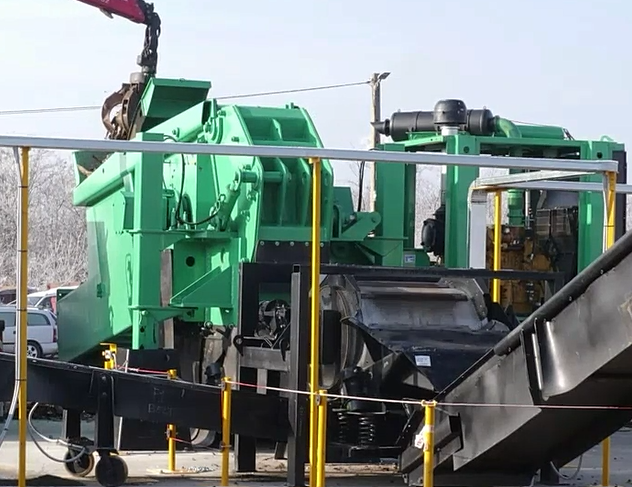
HAMMER MILLS FOR SCRAP METALS
Ing Bonfiglioli’s hammer mills are the ideal choice for scrap metal crushing and guarantee a high-quality final material to feed furnaces.
Key features:
- Equipped with a high crushing capacity, from 5 to 50 ton/hour
- Suitable for a wide range of materials
- Powered by diesel or electric motors, with no need for civil works for installation
- Designed with a fully automatic cycle and remote control thanks to the PLC system
- Conceived for effective separation of high-value non-ferrous materials, for a clean and dense final material
- Installable on-site, without the need for ground anchoring
- Compliant with environmental regulations and sustainable management of residues (plastic, glass, rubber)
Advantages of Ing Bonfiglioli scrap metal mills:
- Low operating costs: thanks to simplified maintenance and system efficiency.
- Convenience: faster disassembly and reassembly at a lower cost compared to competitors.
Ing Bonfiglioli’s scrap crushing machines and industrial metal shredders offer an efficient, cost-effective, and versatile solution for scrap metal processing.
Discover our range and optimise your scrap processing process with the best solutions available!
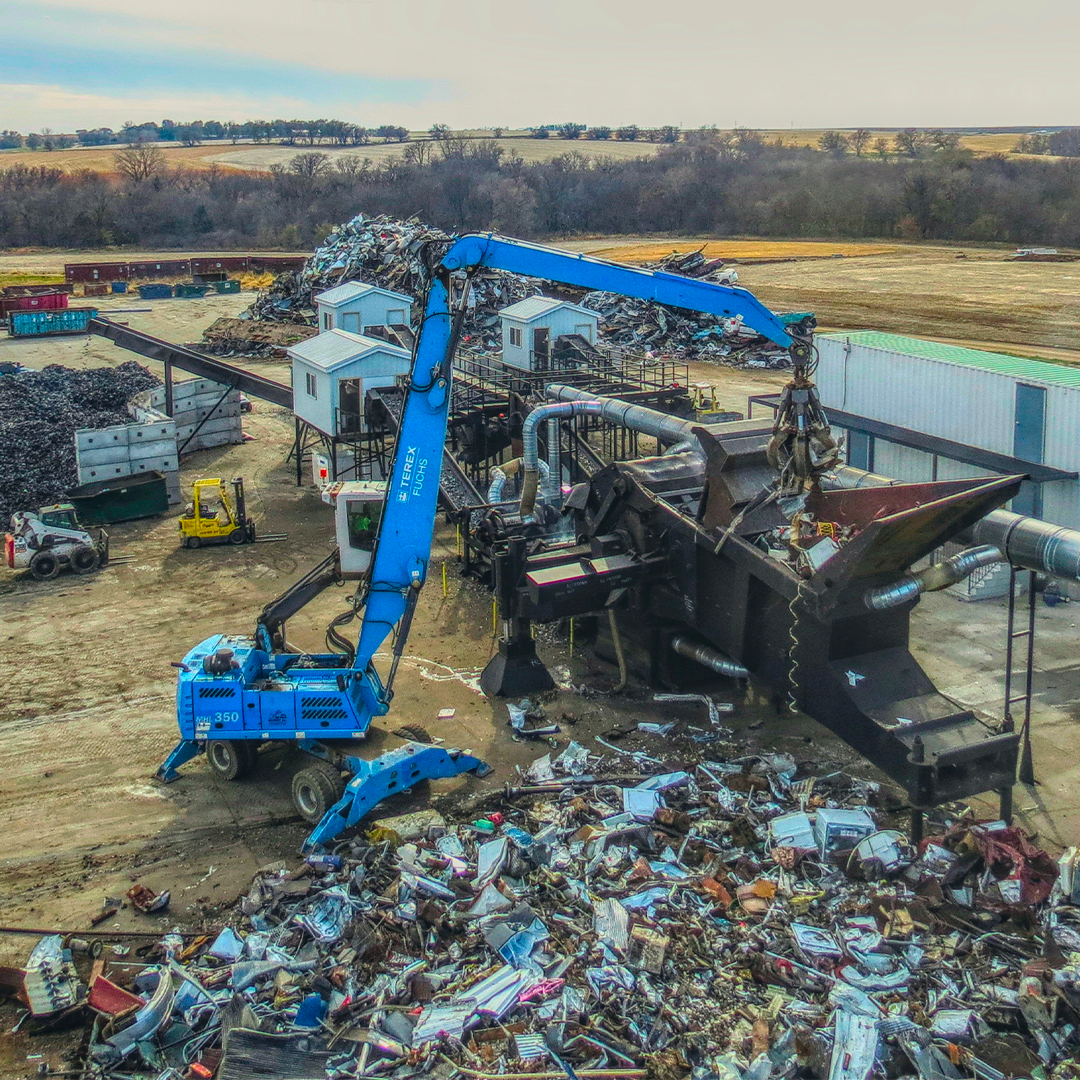
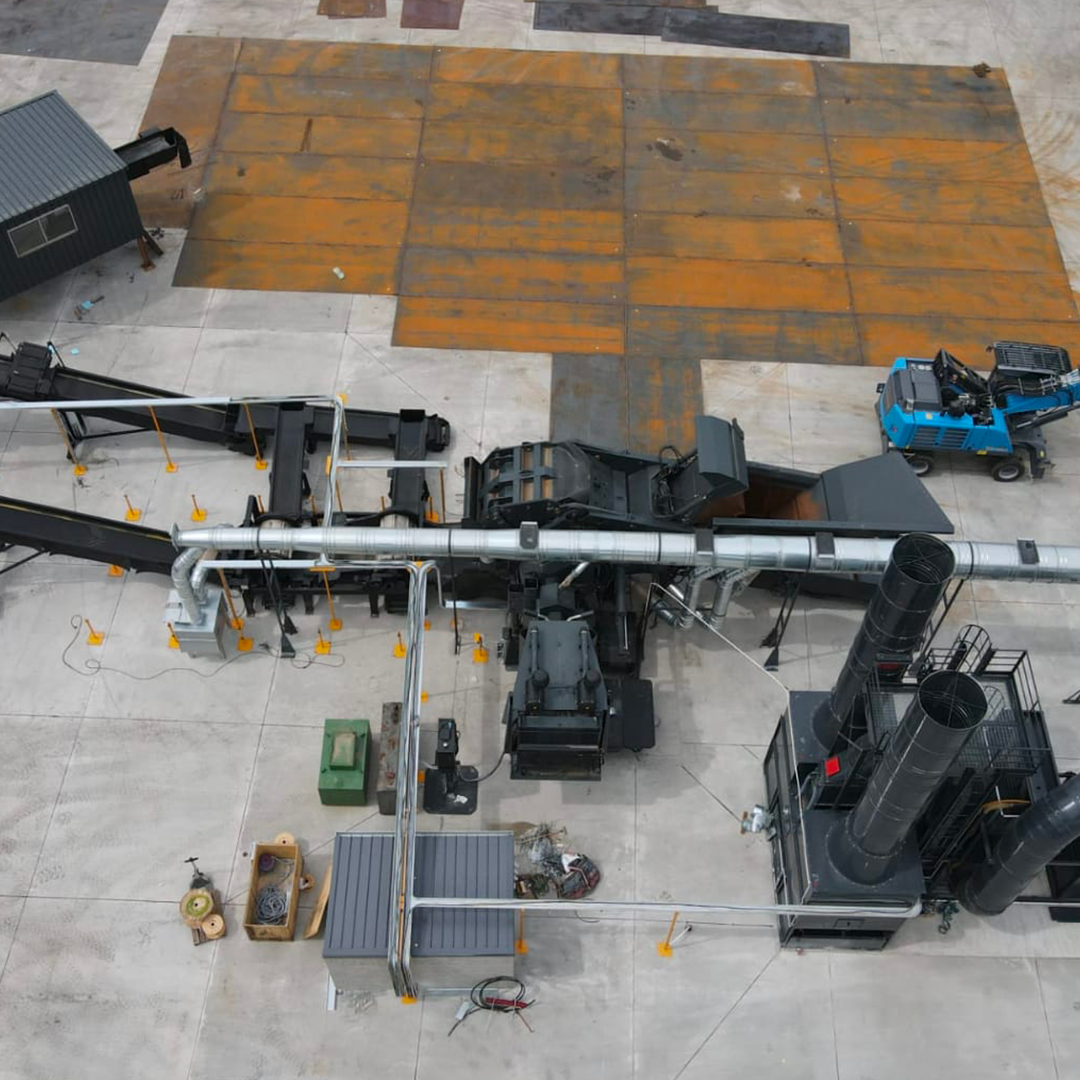
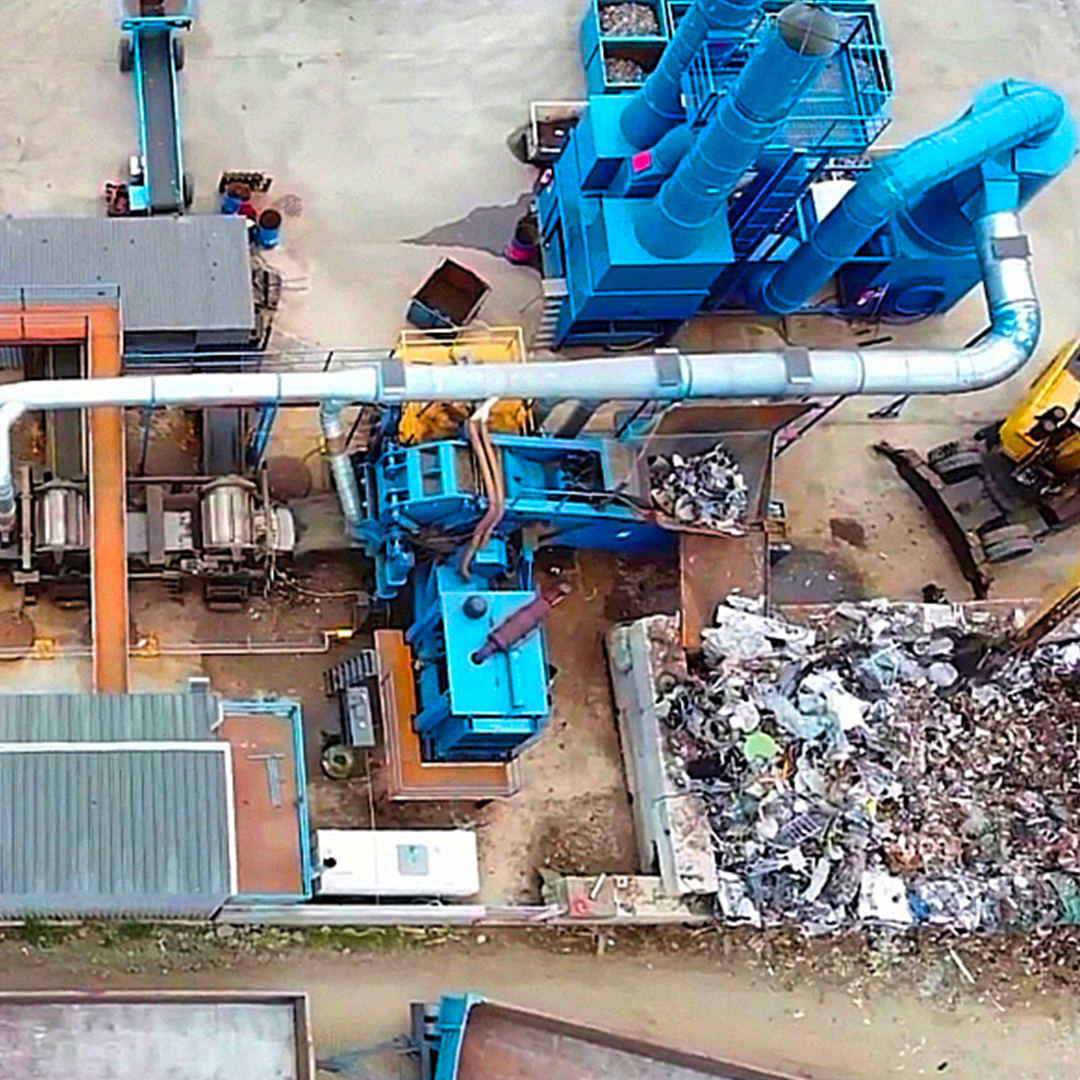
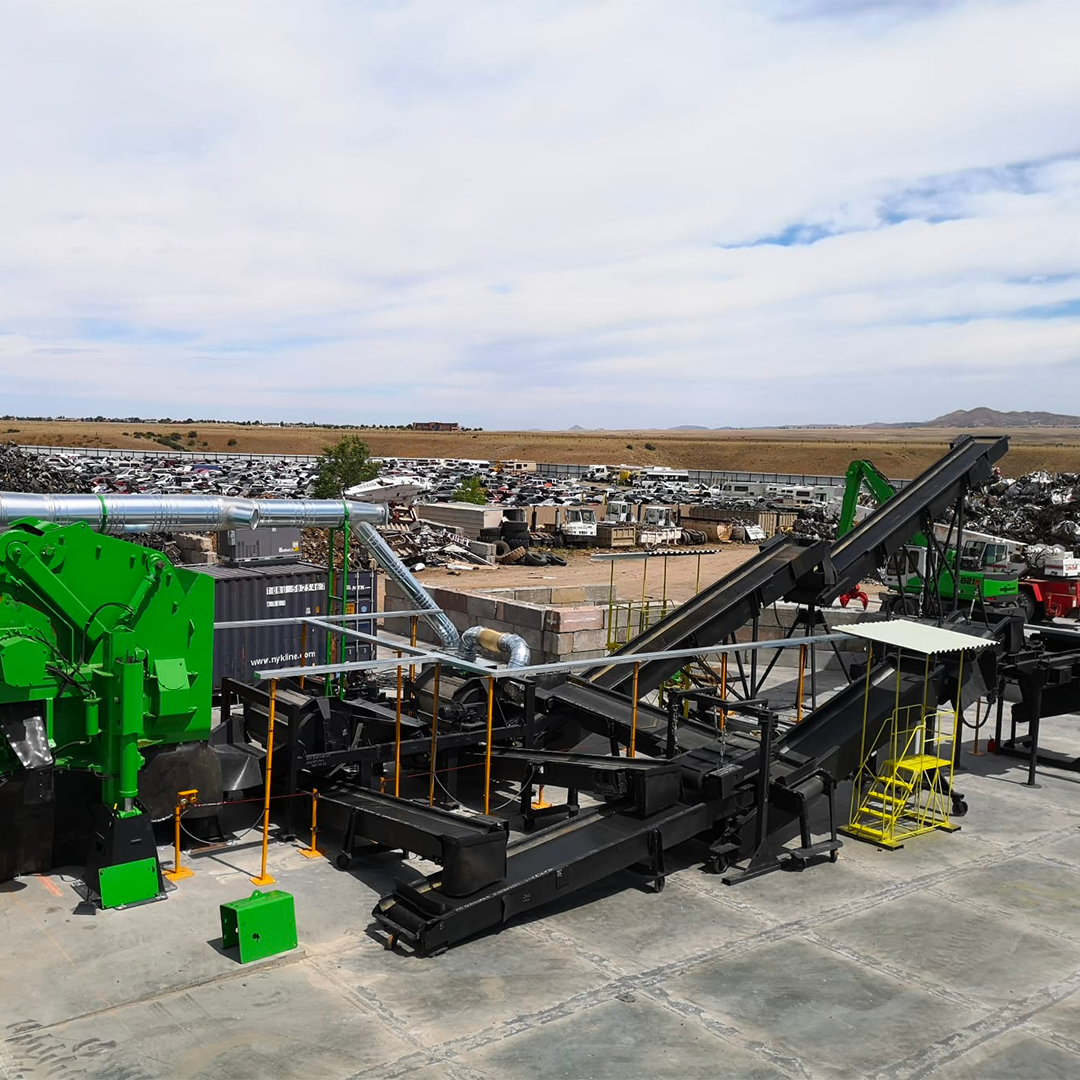
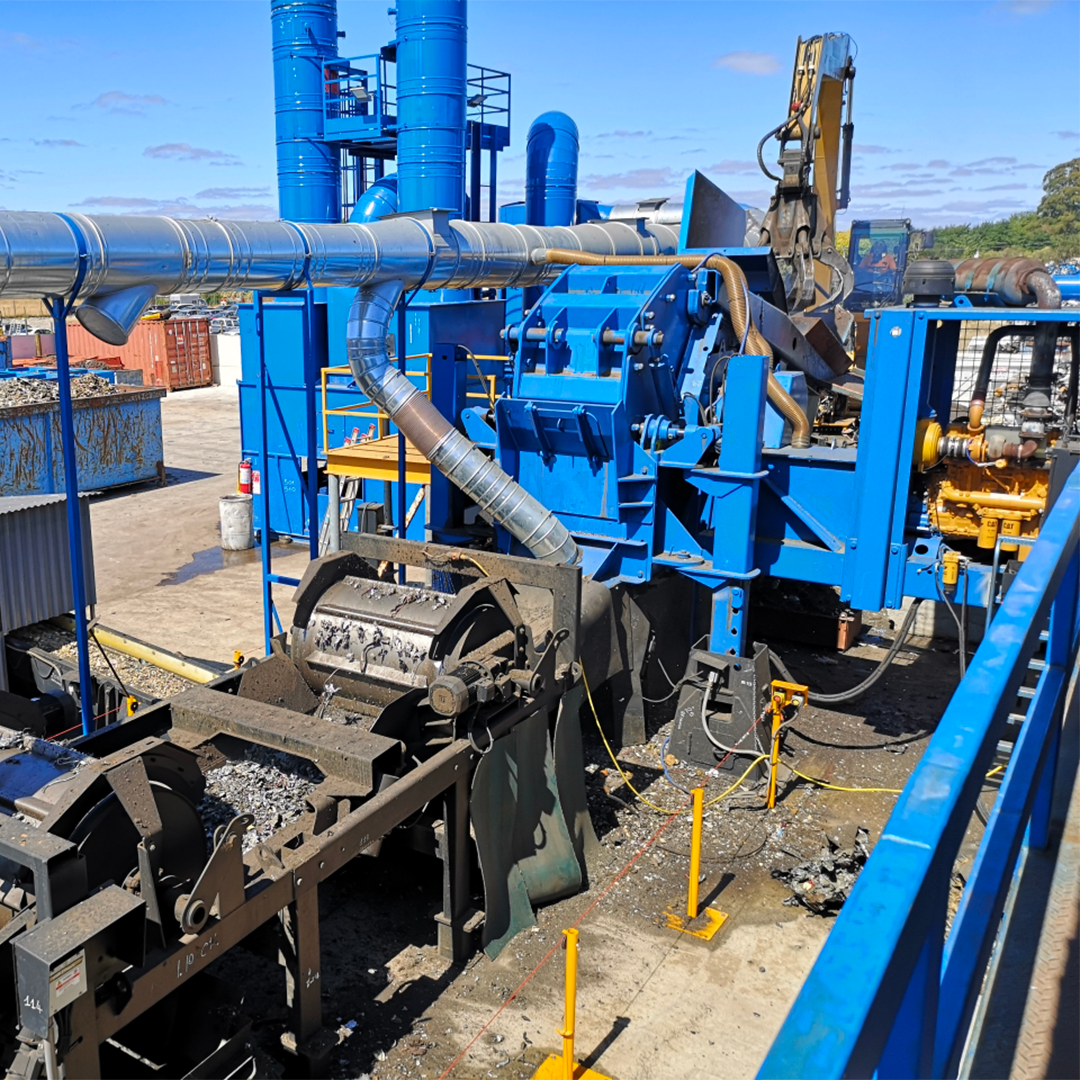
Scrap metal mills
Hammer mills operate through a high-energy impact process. The metal scrap is fed into an armoured crushing chamber where a high-speed rotor, equipped with beating masses (the “hammers”), repeatedly strikes the material. This intensive mechanical action, technically defined as hammer crushing, causes the pulverisation, volumetric reduction, and separation of the different scrap components. The size of the output material (often called “proler”) is controlled by specific grids installed at the chamber’s exit. The role of hammer crushing plants in preparing scrap for the refining process (i.e., for melting in furnaces) is twofold and fundamental:
- Liberation and cleaning: the metal crushing process separates ferrous materials from non-ferrous ones (like aluminium or copper) and from inert materials (plastic, glass, rubber). Ing. Bonfiglioli’s systems are designed to optimise this separation, ensuring a clean, high-quality final material.
- Densification: hammer mills for metal scrap compact the material, significantly increasing its bulk density. Denser scrap optimises furnace loading, reduces energy costs for melting, and improves the overall efficiency of the steel mill.
In summary, hammer mills for preparing scrap for the refining process do not just “break” the metal; they transform it into a homogeneous, clean, and dense secondary raw material, ready to be reintroduced into the production cycle with maximum efficiency.
Hammer mills are extremely flexible metal recycling machines, designed for the volumetric reduction of scrap and its valorisation in preparation for melting. Their primary industrial application is to act as hammer mills for preparing scrap for the refining process. In this operational context, they are technically known as pre-refining hammer mills or, more succinctly, pre-refiners. Specific applications cover the entire spectrum of scrap processing:
- Processing mixed scrap: they are used as hammer mills for processing mixed scrap (such as collected scrap or “proler”), where they excel at separating metals from inert materials (plastic, rubber, glass);
- Ferrous metals: hammer mills for grinding ferrous scrap allow for the processing of light sheet metal and scrap derived from vehicles;
- Non-ferrous metals: they have crucial applications as hammer mills for aluminium and copper scrap and, more specifically, as hammer mills for recycling aluminium scrap (e.g., profiles, casings);
- Industrial scrap: in this field, our plants are designed to tackle the most complex challenges. They operate effectively as hammer mills for industrial scrap recovery, processing production waste, offcuts, and obsolete materials. They also perform the critical function of hammer mills for crushing scrap from industrial plants resulting from demolitions or revamping. Their engineering robustness also makes them the ideal solution as hammer mills for heavy metal scrap, ensuring optimal reduction even for materials with very high density.
In summary, these machines represent the benchmark technical solution for any operator needing a hammer mill to reduce metal scrap for foundry or steel mill.
Absolutely. Hammer mills represent the benchmark technology for processing End-of-Life Vehicles (ELVs). Hammer mills for processing end-of-life vehicles are specifically engineered to process the pre-decontaminated carcass (after the removal of liquids and batteries) in a single pass. Our high-energy hammer crushing system manages the entire process of crushing metal scrap from cars. The intensive mechanical action ensures optimal pulverisation, densification, and liberation of the different fractions (ferrous metals, non-ferrous metals, and inert materials). These specific hammer mills for scrap are designed for maximum efficiency and fall into the broader category of hammer mills for crushing demolition scrap, given the complexity and toughness of the input material.
The main advantages of hammer mills for metal scrap lie in three key areas: final product quality, operational efficiency, and application robustness.
- Product quality (proler): the hammer crushing for metals process is not limited to volumetric reduction. It guarantees excellent metal recovery and separation via hammer mills, liberating ferrous materials from inert materials (plastic, rubber) and non-ferrous materials (copper, aluminium). This qualifies them as ideal pre-refining hammer mills, producing a clean, dense, and homogeneous material, ready for the foundry.
- Operational efficiency: advanced engineering translates into hammer mills for reducing operating costs in recycling. Our hammer mills with high energy efficiency for scrap optimise consumption per tonne produced, while simplified maintenance reduces downtime.
- Robustness and versatility: Ing. Bonfiglioli hammer mills for crushing metal scrap are engineered for maximum durability in processing complex materials, including hammer mills for heavy metal scrap. Our range of solutions focuses on non-transportable hammer mills—large stationary plants with very high capacity. Although designed for fixed installations, these plants introduce a unique logistical advantage: disassembly and reassembly take only 4 days, a time significantly shorter than industry standards.
Choosing the correct hammer mills requires an in-depth technical analysis of specific requirements. When considering purchasing hammer mills for scrap, it is essential to contact suppliers of industrial hammer mills with proven experience, capable of guiding the customer in analysing key parameters. The determining factors for selection include:
- Type of input material: the hammer mill for processing metal scrap must be engineered for the specific input. For example, the requirements for processing collected scrap (proler) differ from those for hammer mills for new metal scrap (like industrial offcuts) or complex applications like hammer mills for WEEE recycling.
- Performance objectives: it is necessary to define the hourly production capacity (ton/hour) and the required degree of densification. The best hammer mills for metal crushing are those that optimise the volumetric reduction of scrap, maximising the value of the final product.
- Technical configuration and TCO (Total Cost of Ownership): our technical office analyses the entire crushing system, sizing the correct hammer mill power and evaluating customisable options of the hammer mills (e.g., type of hammers, screening grids). Finally, it is crucial to consider the hammer mill maintenance plan to ensure low operating costs and maximum efficiency over time.